LinkWithin

Related Posts Plugin for WordPress, Blogger...
Breaking News
NEWS OF THE GANGS

Download

Tuesday, 22 January 2013

Ms Sandiford to be executed for drug trafficking.

A British grandmother has been sentenced to death by firing squad for smuggling almost 5kg of cocaine into Bali.

Lindsay Sandiford was arrested in May last year after she tried to enter the Indonesian holiday island with illegal drugs worth £1.6 million hidden in her suitcase.

Local prosecutors had called for the 56-year-old housewife to be jailed for 15 years. But today there were gasps in the Bali courtroom when a panel of judges announced Ms Sandiford would be executed for drug trafficking.

As the shock verdict was announced, Ms Sandiford, from Gloucestershire, slumped back in her chair in tears before hiding her face with a brown sarong as she was led out of the courtroom.

Read More

Tuesday, 4 September 2012

Griselda Blanco, gunned down in Medellin, Colombia Two armed riders pulled up to Blanco as she was leaving a butcher shop in her hometown

Florida Department of Corrections

Griselda Blanco in 2004.

The convicted Colombian drug smuggler known as the “Godmother of Cocaine,” Griselda Blanco, 69, was gunned down by a motorcycle-riding assassin in Medellin, Colombian national police confirmed late Monday, according to the Miami Herald.

Blanco spent nearly 20 years in prison in the United States for drug trafficking and three murders before being deported to Colombia in 2004, the Herald reported.

Two armed riders pulled up to Blanco as she was leaving a butcher shop in her hometown, and one shot her twice in the head, the Herald reported, citing a report in El Colombiano newspaper.

Family members said Blanco had cut her ties to organized crime after returning to her country, the BBC reported. Police said they were investigating the motive.

Blanco was one of the first to engage in large-scale smuggling of cocaine into the United States from Colombia and set up many of the routes used by the Medellin cartel after she was sentenced in the United States in 1985, the BBC reported.

Investigators told the Herald that they estimate conservatively that Blanco was behind about 40 slayings. She was convicted in connection with three murders: Arranging the killing of two South Miami drug dealers who had not paid for a delivery, and ordering the assassination of a former enforcer for her organization, an operation that resulted in the death of the target’s 2-year-old son, the Herald reported.

Three of Blanco’s husbands were killed in violence related to drugs, the Herald reported, and one of her sons was named Michael Corleone, a reference to “The Godfather” movies.

Blanco is credited with originating motorcycle assassinations, the Herald reported.

“This is classic live-by-the-sword, die-by-the-sword,” filmmaker Billy Corben, who with Alfred Spellman made two “Cocaine Cowboys” documentaries, told the Herald. “Or in this case, live-by-the-motorcycle-assassin, die-by-the-motorcycle assassin.”

Read More

Saturday, 1 September 2012

Major wildfire in Malaga leaves elderly Briton dead and his wife missing

One person was confirmed dead and another missing on Friday night after a major wildfire Affected Municipalities of the Coin, Alhaurin el Grande, Mijas, Marbella and Ojén, in Málaga province. The victim is a British man aged 78 was found Whose charred body in the area of ​​Las Blanquillas, inside the city limits of Ojén. His wife has not yet been found. Meanwhile, a couple in late fifties was taken Their hospital with burns to 60 percent to of Their Bodies. Both lived in a detached home inside the Marbella residential estate of El Rosario. A mother and her two children were found hiding inside a cave in Ojén and taken to hospital to be Treated for smoke inhalation. Five other people Were Also Evacuated from Their Homes. The fire was Extending to the Sierra de las Nieves even as the chief of the firefighting department Málaga, Manuel Marmolejo, Announced That a new front had opened up and Reached the area of ​​Juanar, where two hotels had to be Evacuated. Marmolejo said Extending the wildfire was with "great virulence." The blaze Began around 6.50pm on Thursday and soon extended to a perimeter of Between 50 and 60 kilometers, said Marmolejo. An Estimated 1.000 hectares of land Have Been Affected.

Read More

Friday, 31 August 2012

Marbella eight urbanisations has been evacuated. 4,000 people have been evacuated from their homes.

The village of Ojen and eight urbanisations in Marbella have been evacuated. 4,000 people have been evacuated from their homes.


The fire broke out on Thursday afternoon and has affected Coín where some 60 homes have had to be evacuated. The fire was still burning overnight so the terrestrial fire fighters continued to work overnight, according to the fire fighting Infoca.
The extinction of the blaze was complicated by the strong hot wind known locally as the ‘Terral’.
Three of the four fronts were brought under control just after midnight.

The fire is also affecting Alhaurín El Grande and Mijas where homes have been evacuated in the Entrerrios area, according to the Junta de Andalucía.

The Barranco Blanco urbanisation in Coín is close to the fire, and there were fears that non-forestry zones could be affected.

In Calahonda there are flames in the urbanisation between Calle Cristóbal Colón and Residential Princess Park. The upper zone of Calahonda is being evacuated.

Two people have been seriously injured with burns. They were in the urbanisation El Rosario where five homes have been affected by the flames. The two injured were taken to the Costa del Sol Hospital in Marbella a 4.30am this morning. One of them has burns to 50% of their body.

The AP-7 Motorway was for a time overnight for a while.

The Mayor of Marbella, Ángeles Muñoz, has confirmed that several urbanisations have been evacuated, including La Mairena, Elviria, the area of Las Chapas and Molinillo where the fire is concentrated and continues to advance.

The Hotel La Cala Resort has also been evacuated of its 200 guests.

Those evacuated have been told to go to the sports centre in La Cala, the sports centre in Las Lagunas or the Mijas Hippodrome.

Between 25 and 30 families have been evacuated from Alpujata on the outskirts of Monda.

13 airborne fire fighting planes were brought in on Thursday afternoon from Málaga, Córdoba and Granada, and they have resumed their work at first light.

Land forces totalled 99 fire fighters distributed in seven brigades, three reserve brigades, five fire engines, five operation technicians and four environmental vehicles.

The fire continues out of control on one front and the Mijas Town Hall has told the residents of la Atalaya to urgently leave their homes. A level 1 has been put in place and that indicates that the prevision for the fire could affect non-forestry assets.

350 firefighters are at the scene this morning and the fire fighting planes have returned to work.

Read More

Numerous homes have been burnt out and others seriously affected in Ojén and Marbella. The urbanisation La Mairena has flames affecting several properties.


The situation is particularly difficult in the upper part of Calahonda where residents have been evacuated and there are flames in the urbanisation between Calle Cristóbal Colón and the residential complex Princess Park.

Some 3,000 residents of El Rosario in Marbella have been evacuated, and German couple in their 60’s have been seriously hurt. Marbella Ayuntamiento says they were surprised by the flames and now have burns 40-50% of their bodies. 

Those affected by the blaze are being first treated in the Costa del Sol Hospital in Marbella, and then many suffering burns are being transferred to Málaga to the Specialist Burns Unit in the Carlos Haya Hospital.

People have been sleeping in sports centre in Monda and Marbella and municipal buses have been laid on as transport.

The Junta delegate in Málaga, José Luis Ruiz Espejo, has said today that he suspects the fire could have been started deliberately given its rapid propagation. He said the technicians suspected the fire was man made from the start.

Ground fire fighters worked through the night facing difficult terrain and totalled 99 fire fighters distributed in seven brigades, and three reserve brigades, five fire engines, five operation technicians and four environmental vehicles.

At first light this morning the 17 fire-fighting planes returned to the air.
Five planes which drop earth, four large capacity helicopters, five transport helicopters, two amphibian planes, and a plane for coordination and vigilance.

More than 250 professionals from fire fighting organisation INFOCA are working this morning in Mijas, Marbella, Alhauin de la Torre and in Coín where the fire started.

The Mayor of Marbella, Ángeles Muñoz, has confirmed that several urbanisations have been evacuated, including La Mairena, Elviria, the area of Las Chapas and Molinillo where the fire is concentrated and continues to advance.
Between 25 and 30 families have been evacuated from Alpujata on the outskirts of Monda.

The fire broke out on Thursday afternoon and has affected Coín where some 60 homes have had to be evacuated. The fire was still burning overnight as so the terrestrial fire fighters continued to work over night, according to the fire fighting Infoca.
The extinction of the blaze is being complicated by the strong hot wind known locally as the ‘Terral’.

Three of the four fronts were brought under control just after midnight.

The fire is also affecting Alhaurín El Grande and Mijas where homes have been evacuated in the Entrerrios area, according to the Junta de Andalucía.
The Barranco Blanco urbanisation in Coín is close to the fire, and there were fears that non-forestry zones could be affected.
The Hotel La Cala Resort has also been evacuated of its 200 guests.

Those evacuated have been told to go to the sports centre in La Cala, the sports centre in Las Lagunas or the Mijas Hippodrome.
13 airborne fire fighting planes were brought in on Thursday afternoon from Málaga, Córdoba and Granada, and they resumed their work at first light this morning.

The fire continues out of control and the Mijas Town Hall has told the residents of la Atalaya to urgently leave their homes. A level 1 has been put in place and that indicates that the prevision for the fire could affect non-forestry assets.

Read More

A huge wildfire is approaching the wealthy resort of Marbella on Spain's Costa del Sol, where the authorities have evacuated thousands of people.

Flames reached the Elviria area on the edge of Marbella early on Friday.

About 1,000 people have been evacuated from the edge of Marbella, about 3,300 from Ojen and others from a camp site at Alpujata, Spanish media report.

They include at least 300 British expats sent to evacuation centres, the UK embassy told the BBC.

Marbella is famous for its up-market hotels and villas - it is a favourite haunt of wealthy foreigners.

Overnight the fire spread rapidly through a 12km (eight-mile) coastal strip, not far from holiday resorts.

Two people have suffered serious burns and some homes have been engulfed by the fire.

The Costa del Sol is one of Spain's most popular holiday destinations and home to a large British expatriate community.

The British embassy says it is working closely with the Spanish authorities and consular staff have been deployed to assist those affected.

Spain Costa del Sol map

Much of Spain's countryside was left tinder-dry this summer by a prolonged heatwave. There have been major wildfires in northern Catalonia - near the Pyrenees - and on La Gomera, in the Canary Islands.

The wind speed has dropped since Thursday and the air is more humid, so there are hopes that the Costa del Sol blaze can be contained soon.

More than 250 firefighters are battling the fire, helped by 17 aircraft dropping water to douse it, Spain's El Pais news website says.

The fire started on Thursday afternoon in the Sierra Negra area of Coin, near Malaga and has now affected an area of some 1,000 hectares (2,471 acres).

Part of the AP-7 highway was cut temporarily, but other roads are unaffected. It is not yet clear how many homes have been damaged or destroyed.

Read More

Tuesday, 28 August 2012

Amber Gold affair is one of the biggest financial scandals to hit Poland since the fall of communism in 1989.

It was pretty much all the money Bozena Oracz had after a working life as an accountant: the equivalent of $15,000. She placed it in a fund investing in gold, with the hope of paying for her daughter's studies and getting treatment for a bad knee.

Those dreams were dashed when she discovered she had fallen victim to an elaborate fraud scheme that has left thousands of Poles, many of them elderly, facing financial ruin.

The so-called Amber Gold affair is one of the biggest financial scandals to hit Poland since the fall of communism in 1989. The extent of wrongdoing is still murky, but it seems to have some elements of a pyramid scheme, meaning the financial institutionused funds from new clients to pay off older clients rather than investing them.

Consumed with anger and desperation, 58-year-old Oracz traveled last week from a small town near Warsaw to a law firm in the capital to consider whether, after losing 50,000 zlotys, she should risk another 3,000 zlotys ($920; €730) on the fee to join a class-action lawsuit seeking to recover some of the losses.

"This was a lot of money to me — it was my savings," Oracz said, fighting back tears. Now retired and living on a small pension, she sees no way of building another nest egg. "My pension barely covers my needs," she said.

The affair has raised questions about the effectiveness of Poland's justice system and government because authorities failed to act against the scheme despite red flags from regulators and the criminal record of its young owner. Scrutiny has also focused on the prime minister due to business dealings his son had with those running the scheme. The scandal has even touched democracy icon Lech Walesa, who fears it could tarnish his good name.

Prosecutors say investors lost about 163 million zlotys ($50 million; €40 million), a number that has been mounting as more and more victims come forward. Any law suits could take care years to go through the courts, with no guarantee of their outcome.

"People are desperate," said Pawel Borowski, a lawyer preparing the class-action suit that Oracz is considering joining. "In most cases the clients lost life savings or sold family properties to make investments."

The financial institution, Amber Gold, promised guaranteed returns of 10 to 14 percent a year for what it claimed were investments in gold. Many of its clients were older Poles who grew up under communism and lacked the savvy to question how a financial firm could guarantee such a high return on a commodity whose value fluctuates on the international market. The promised returns compared well to the 3 to 5 percent interest offered by banks on savings accounts — earnings essentially wiped out by the country's 4 percent inflation rate.

"These were people with a low level of financial education," said Piotr Bujak, the chief economist for Poland at Nordea Markets. "They think it's still like in the old times, where everything was guaranteed by the state. They underestimated the risk."

Amber Gold launched in 2009, opening branches in city centers alongside respected banks, with white leather sofas and other sleek touches that conveyed sophistication and respectability. It bombarded Poles with convincing advertisements. Some early investors got out with their expected gains, adding to the fund's credibility.

The company, based in Gdansk, capitalized on gold's allure while playing on people's anxieties in unpredictable financial times. "We are dealing with a loss of confidence in the entire financial system and an urgent need for safe investments," one ad said. "The environment for gold is perfect."

Amber Gold drew in 50,000 investors over its three years of operation, though the company's founder, Marcin Plichta, said there were only about 7,000 at the time of liquidation.

Soon after Amber Gold began operations, the Polish Financial Supervision Authority put it on a "black list" of institutions that operate like banks without authorization. There are 17 other such black-listed institutions in operation, but the regulators lack the authority to shut them down. This has sparked a debate in the government and news media about whether courts should be more aggressive in intervening.

According to prosecutors, the company did use some of its money to invest in at least one legitimate business: It was the main investor in budget airline OLT Express. It was this investment that brought Amber Gold down — when the airline filed for bankruptcy, Amber Gold entered liquidation and its scheme of investments unraveled. Its bank accounts were blocked and it was unable to return the money of thousands of its customers.

Plichta was charged this month with six counts of criminal misconduct.

Prime Minister Donald Tusk's center-right government went into damage-control mode when it emerged that the leader's son, Michal Tusk, had done PR work for the airline. Tusk said he had warned his son against doing business with Plichta but that ultimately he son makes his own decisions.

Leszek Miller, the head of the opposition Democratic Left Alliance, asked how Tusk could warn his son against involvement in the airline but not warn the thousands of Poles who invested in the fund. Miller has called for a parliamentary inquiry into the scandal.

Public discontent is also centering on the justice system because Plichta, 28, has past convictions for fraud, and many Poles are asking why authorities — aware of his criminal record — didn't stop him sooner. Born Marcin Stefanski, he took his wife's last name to distance himself from his past crimes.

The country's top prosecutor, Andrzej Seremet, admitted Monday that prosecutors were negligent in failing to heed multiple warnings since 2009 about Amber Gold from the financial supervisory body. He announced personnel changes in the office he blamed for mistakes.

The affair also has an unlikely connection to the Solidarity leader and former president, Lech Walesa, because an Oscar-winning director, Andrzej Wajda, was relying on money from Amber Gold to produce a film about Walesa's struggle in the 1980s.

Walesa came out publicly to make clear he is not involved in any way, saying he doesn't want his name "dirtied."

Many of the unlucky investors are not only furious but wracked by shame and guilt.

Engineer Andrzej Malinowski, 61, put three months of salary — 25,000 zlotys ($7,660; €6,100) — into Amber Gold. He made the investment without consulting with his wife, sensing that there was some risk and that she would not have agreed.

Now he is so shaken and embarrassed that he doesn't want to talk about it, leaving his wife, Danuta Malinowska, to help unravel the mess.

"He saw that gold was going higher and higher so he believed that maybe it would be a good deal," Malinowska said. "Now he has so much guilt that I am trying to help — contacting the lawyer, filling in the forms, writing to the prosecutors. But the justice system is very ineffective. I don't believe we will be getting any of this money back."

Read More

Monday, 27 August 2012

Miguel Angel Trevino Morales new leader is emerging at the head of one of Mexico's most feared drug cartels.

  • Mexico Drug War Zetas_Plan.jpg

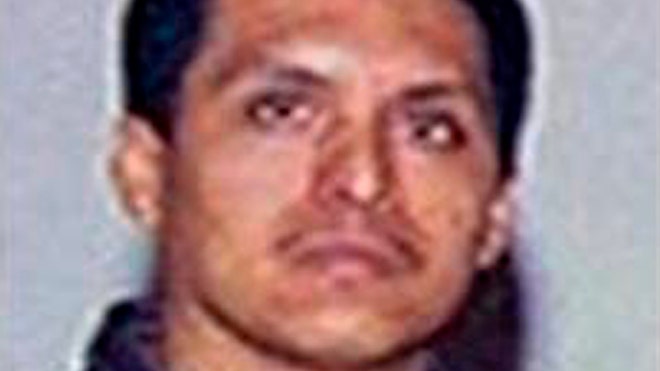
    This undated image taken from the Mexican Attorney General's Office rewards program website on Aug. 23, 2012, shows the alleged leader of Zetas drug cartel, Miguel Angel Trevino Morales, alias âZ-40.â (AP Photo/Mexican Attorney General's Office website)

Mexico's Violent Zetas Cartel Sees New Leader Miguel Angel Trevino Morales A split in the leadership of Mexico's violent Zetas cartel has led to the rise of Miguel Angel Trevino Morales, a man so feared that one rival has called for a grand alliance to confront a gang chief blamed for a new round of bloodshed in the country's once relatively tranquil central states.

Trevino, a former cartel enforcer who apparently has seized leadership of the gang from Zetas founder Heriberto Lazcano Lazcano, is described by lawmen and competing drug capos as a brutal assassin who favors getting rid of foes by stuffing them into oil drums, dousing them with gasoline and setting them on fire, a practice known as a "guiso," or "cook-out".

Law enforcement officials confirm that Trevino appears to have taken effective control of the Zetas, the hemisphere's most violent criminal organization, which has been blamed for a large share of the tens of thousands of deaths in Mexico's war on drugs, though other gangs too have repeatedly committed mass slayings.

"There was a lot of talk that he was pushing really hard on Lazcano Lazcano and was basically taking over the Zetas, because he had the personality, he was the guy who was out there basically fighting in the streets with the troops," said Jere Miles, a Zetas expert and U.S. Immigration and Customs Enforcement special agent who was posted in Mexico until last year.

"Lazcano Lazcano, at the beginning he was kind of happy just to sit back and let Trevino do this, but I don't think he understood how that works in the criminal underworld," Miles said. "When you allow someone to take that much power, and get out in front like that, pretty soon the people start paying loyalty to him and they quit paying to Lazcano."

The rise has so alarmed at least one gang chieftain that he has called for gangs, drug cartels, civic groups and even the government to form a united front to fight Trevino Morales, known as "Z-40," whom he blamed for most of Mexico's violence.

"Let's unite and form a common front against the Zetas, and particularly against Z-40, Miguel Angel Trevino Morales, because this person with his unbridled ambition has caused so much terror and confusion in our country," said a man identified as Servando Gomez, leader of the Knights Templar cartel, in a viedo posted Tuesday on the internet.

A Mexican law enforcement official who wasn't authorized to speak on the record said the video appeared to be genuine,

"He is the main cause of everything that is happening in Mexico, the robberies, kidnappings, extortion," Gomez is heard saying on the tape. "We are inviting all the groups ... everyone to form a common front to attack Z-40 and put an end to him."

Trevino Morales has a fearsome reputation. "If you get called to a meeting with him, you're not going to come out of that meeting," said a U.S. law-enforcement official in Mexico City, who spoke on condition of anonymity because of the sensitivity of the topic.

In two years since Zetas split with their former allies in the Gulf cartel — a split in which Trevino reported played a central role — the gang has become one of Mexico's two main cartels, and is battling the rival Sinaloa cartel.

Now the Zetas' internal disputes have added to the violence of the conflict between gangs. Internal feuds spilled out into pitched battles in the normally quiet north-central state of San Luis Potosi in mid-August, when police found a van stuffed with 14 executed bodies.

San Luis Potosi state Attorney General Miguel Angel Garcia Covarrubias told local media that a 15th man who apparently survived the massacre told investigators that both the killers and the victims were Zetas. "It was a rivalry with the same organized crime group," Garcia Covarrubias said.

The leadership dispute also may have opened the door to lesser regional figures in the Zetas gang to step forward and rebel, analysts and officials said.

Analysts say that a local Zetas leader in the neighboring state of Zacatecas, Ivan Velazquez Caballero, "The Taliban," was apparently trying to challenge Trevino Morales' leadership grab, and that the 14 bullet-ridden bodies left in the van were The Taliban's men, left there as a visible warning by Trevino Morales' underlings.

The Taliban's territory, Zacatecas, appears to have been a hot spot in Trevino's dispute with Lazcano. It was in Zacatecas that a professionally printed banner was hung in a city park, accusing Lazcano of betraying fellow Zetas and turning them in to the police.

Trevino began his career as a teenage gofer for the Los Tejas gang, which controlled most crime in his hometown of Nuevo Laredo, across the border from the city of Laredo, Texas, officials say.

Around 2005, Trevino Morales was promoted to boss of the Nuevo Laredo territory, or "plaza" and given responsibility for fighting off the Sinaloa cartel's attempt to seize control of its drug-smuggling routes. He orchestrated a series of killings on the U.S. side of the border, several by a group of young U.S. citizens who gunned down their victims on the streets of the American city. American officials believe the hit men also carried out an unknown number of killings on the Mexican side of the border, the U.S. official said.

Trevino Morales is on Mexico's most-wanted list, with a reward of 30 million pesos ($2.28 million) offered for information leading to his capture.

Raul Benitez, a security expert at Mexico's National Autonomous University, said that the Zetas are inherently an unstable cartel with an already huge capacity for violence, and the possibility of more if they begin fighting internal disputes. "I think the Zetas are having problems, and there is no central command," he said.

The Zetas have been steadily expanding their influence and reaching into Central America in recent years, constructing a route for trafficking drugs that offloads Colombian cocaine in Honduras, ships it overland along Mexico's Gulf Coast and runs into over the border through Trevino Morales' old stomping grounds.

Samuel Logan, managing director of the security analysis firm Southern Pulse, notes that "personality-wise they (Trevino Morales and Lazcano) couldn't be more different," and believes the two may want to take the cartel in different directions. The stakes in who wins the dispute could be large for Mexico; Lazcano is believed to be more steady, more of a survivor who might have an interest in preserving the cartel as a stable organization.

"Lazcano may be someone who would take the Zetas in a direction where they'd become less of a thorn in the side for the new political administration," Logan said in reference to Enrique Pena Nieto, who is expected to take office as president on Dec. 1. "In contrast, Trevino is someone who wants to fight the fight."

Referring to Ignacio "Nacho" Coronel, a member of the rival Sinaloa Cartel who died in a shootout with soldiers in July 2010, Logan noted, "Trevino is someone who is going to want to go out, like Nacho Coronel went out, with his guns blazing."


Read More

Laurence Kilby, 40, of Cheltenham, who built and raced cars, was arrested after police seized cocaine with a street value of £1m.


Laurence Kilby, 40, of Cheltenham, who built and raced cars, was arrested after police seized cocaine with a street value of £1m.

A "privileged" racing driver has been jailed with 11 other drug smugglers. Crown Court heard he was head of a gang moving drugs from Eastern Europe along the M4 corridor to London, western England and south Wales.

Kilby was heavily in debt and turned to crime to maintain his lifestyle of fast cars and high living.

Raids on properties

Kilby was jailed in June but his conviction, and those of the rest of the gang, can now be reported following the conclusion of another trial.

In an undercover operation between Gloucestershire and Avon and Somerset Police, officers seized 3kg of cocaine as it was being ferried between London and Cheltenham in October 2010.

Another 1kg of the drug was intercepted in Cheltenham in February 2011 and 2.5kg was discovered in raids on properties in Cheltenham, Staverton, Bristol and London in July 2011.

The gang of 12 drug dealers from Gloucestershire, Bristol and London received sentences of between 18 years and four years seven months.

It can now be reported Kilby, who was jailed in June, and Vladan Vujovic, 43, of Grange Road, London were found guilty of conspiracy to supply Class A drugs. Both were jailed for 18 years.

Laurence Kilby racing in the 2009 Castle Combe Saloon Car ChampionshipKilby built and raced cars with the company he owned, Ajec Racing

Richard Jones, 42, of Bradley Stoke, Bristol, was sentenced to 15 years for the same offence, and Mark Poole, 47, from Portishead, was sentenced to nine years seven months after pleading guilty to conspiracy to supply Class A drugs.

Police said Kilby sourced the drug in London from an East European criminal gang, which included Vujovic.

Vujovic ran a baggage handling company at Heathrow Airport and was said to receive the cocaine before it was distributed around the South West and Wales.

Kilby is the former husband of Flora Vestey, daughter of Lord Vestey, and was owner of motor racing firm Ajec Racing which was based in Staverton.

He was heavily in debt and turned to crime to maintain his lifestyle of fast cars and high living.

'Well-connected socialite'

In a separate charge, Kilby also pleaded guilty to stealing money from the charity Help for Heroes and was sentenced to 10 months, to run concurrently with his 18-year sentence.

He organised a charity race day at Gloucestershire Airport in July 2010, but failed to pass on between £3,500 and £4,000 in proceeds to the charity Help for Heroes.

Det Insp Steve Bean, from Gloucestershire Police, said Kilby was the main man.

"He portrayed himself as a well-connected socialite and businessman, whilst indulging his ambition as a minor league racing driver.

Drugs wrapped in plastic packagesPolice seized 6.5kg of drugs during the operation

"Despite a privileged background, the reality was that his lifestyle was funded by the ill-gotten gains of drug dealing.

"He continually lied and blamed others in an attempt to distance himself from the conspiracy.

"He displayed an air of arrogance and thought he could get away with it because he didn't get his hands dirty."

The majority of the gang were jailed in June, but reporting restrictions meant it could not be reported until now, after the sentencing of the remaining gang members.

Others members of the gang to be sentenced were:

  • David Chapman, 29, from Bourton-on-the-Water, Gloucestershire, pleaded guilty to possession with intent to supply and was sentenced to nine years.
  • William Garnier, 31, from Cheltenham, pleaded guilty to supplying Class A drugs and was sentenced six years and eight months.
  • Garry Burrell, 46, from Easton, Bristol, and John Tomlin, 28, from Newtown, Gloucestershire both pleaded guilty to possession of cocaine and were sentenced to six years and six months and four years and six months respectively.
  • Timothy Taylor, 40, from Bristol was found guilty of supplying Class A drugs and was sentenced to four years and seven months.
  • Brian Barrett, 48, from Keynsham was found guilty of conspiracy to supply Class A drugs and was sentenced to 10 years.
  • Scott Everest, 39, from Clevedon was found guilty of conspiracy to supply Class A drugs and was jailed for seven years.

Jonathan Tanner, 45, from Warminster was sentenced to 18 months for possession with intent to supply of cannabis, but was cleared of conspiracy to supply Class A drugs.

Darren Weetch, 38, from Bristol, pleaded guilty to possession of cocaine with intent to supply. He was sentenced to 16 months.

Officers also worked with Thames Valley Police and the Metropolitan Police during the operation.

Read More

Bikie gang suspects in brawl arrests at Penrith shopping centre

FOUR men with alleged links to outlaw motorcycle gangs were arrested last week after a brawl at a Penrith shopping centre. Police officers from the gangs squad and Penrith local area command had been investigating the brawl, which forced shoppers to flee for their safety about 2.45pm last Monday. Police will allege a man was leaving the shopping centre when he was confronted by a group of nine men and fighting began. A number of people tried to intervene, including an unknown male who was assaulted. All involved in the brawl then left the scene. At 7am last Thursday, police simultaneously raided four homes at St Marys, Emu Plains, South Windsor and Freemans Reach. Three men with alleged links to the Rebels were arrested at St Marys and Emu Plains, while an alleged senior Nomads member was arrested at Freemans Reach. During the search warrants, police seized distinctive gang clothing, quantities of anabolic steroids and prescription drugs and a set of knuckledusters. A man, 29, of Emu Plains, was charged with affray, participate in a criminal group and two counts of possess prescribed restricted substance. A man, 44, of Freemans Reach, was charged with affray, possess prohibited weapon, and two counts of possess prescribed restricted substance. A man, 25, of St Marys, and a 23-year-old New Zealand man were each charged with affray and participate in a criminal group. Penrith crime manager Detective Inspector Grant Healey said further arrests were anticipated.

Read More

27 charged in California-Mexico methamphetamine ring

 Local and federal authorities moved Thursday to break up an alleged drug trafficking ring connecting a major Mexican cartel and San Gabriel Valley street gangs, arresting 17 people in a pre-dawn sweep. A federal indictment unsealed Thursday charges 27 defendants with making, possessing and dealing methamphetamine imported by La Familia Michoacana, one of Mexico’s most violent cartels, to two Pomona gangs: Los Amables and Westside Pomona Malditos. Seven law enforcement agencies, including the Pasadena and Pomona police, the Los Angeles County Sheriff’s Department, the FBI and the Drug Enforcement Administration, were involved in the sweep. Thursday’s crackdown is the culmination of a probe called Operation Crystal Light, a 16-month investigation by the San Gabriel Valley Safe Streets Gang Task Force. The investigation was launched after a 2011 kidnapping among suspected gang members in Southern California. Officers said they seized nine weapons, an undisclosed amount of methamphetamine, other drugs, and paraphernalia in Thursday morning raids in Los Angeles, Riverside and San Bernardino counties. The probe involved about 200 law enforcement officers and several undercover purchases. “The goal of the federal task force is to disrupt the network so it’s disrupted permanently,” Timothy Delaney, special agent in charge of the FBI’s Criminal Division in Los Angeles, said. “Today’s arrests took some very serious players in the methamphetamine world off the streets.” The methamphetamine came into the country in liquid form via airplane, boats and cars, officials said. The drug was recrystallized at an Ontario home before local gangs would sell it and funnel money to the Mexican cartel. Most of the drugs were being sold in Pomona and Ontario, according to Assistant U.S. Atty. Shawn Nelson. Dealers were selling multiple pounds a day and making up to $9,000 per pound, Nelson said. He described the arrests as “a good dent” in the Mexican cartel’s local drug network. Three suspects were in custody before the raid and seven remain at large, federal authorities said. The indictment alleges that a La Familia Michoacana associate named Jose Juan Garcia Barron oversaw the transport of the meth between Mexico and Los Angeles County. Delaney said Garcia Barron is among the suspects who have not been apprehended. The 17 arrested Thursday were expected to make their first court appearance Thursday afternoon at U.S. District Court in downtown Los Angeles.

Read More

Police think Ogden drive-bys are tied to gang's power struggle

Police believe drive-by shootings at an Ogden home Tuesday night and Wednesday morning may be related to a violent power struggle within a street gang over control of leadership, drugs and money. Ogden Police Lt. Scott Conley declined to identify the gang, but said members are not affiliated with the Ogden Trece. On Monday, 2nd District Judge Ernie Jones issued a permanent injunction against Trece members, banning them from associating with each other in public and being in the presence of guns, drugs and alcohol. The injunction also places Treces under an 11 p.m. curfew. The drive-by shootings at a home in the 500 block of 28th Street are signs of in-fighting among members of a local gang who are attempting to resolve their differences through escalating violence, Conley said. “They are in the same gang and are arguing back and forth,” he said, noting police have gathered intelligence on the dispute. “We are taking enforcement action to eradicate the problem or get the individuals involved incarcerated.” Six to eight gang members are believed to be involved in the dispute.

Read More

Sunday, 29 July 2012

Read More

Saturday, 28 July 2012

Tulisa's Friend, 21, Shot Dead In Gangland Hit

Reece James, 21, a close friend of Tulisa Contostavlos has been shot dead in a reported gangland attack. The 21-year-old, who appeared with Tulisa in a video for rapper Nines, was shot in the head in a "pre-planned and targeted" hit, 100 miles from his home in London, reports the UK's Sun newspaper. Police found James' body in Boscombe, Bournemouth, at around 2.30am near where Somali drug gangs are said operate. A 22-year-old man was arrested. Reece was said to have been in the area with some friends for "a couple of months", though had filmed the video earlier this month with Tulisa and rapper Nines on the Church End Estate in Harlesden, North West London. The former N Dubz star caused controversy at the time, making a "C" symbol to the camera - the same sign that is used by Harlesden's notorious Church Road Soldiers gang. Tulisa claimed it was a reference to Camden, where she was born. Twitter tributes began flooding in last night, with one user writing, "RIP Reece James. Thoughts are with him and his family and friends". Local MP Tobias Ellwood described the killing as "a spill over from the drugs turf war in the capital", adding, "This was one London gang chasing down another, carrying out a professional hit and then going back".

Read More

Monday, 2 July 2012

Beware of missed call to check SIM cloning

Next time if you get a missed call starting with +92; #90 or #09, don't show the courtesy of calling back because chances are it would lead to your SIM card being cloned. The telecom service providers are now issuing alerts to subscribers —particularly about the series mentioned above as the moment one press the call button after dialing the above number, someone at the other end will get your phone and SIM card cloned. According to reports, more than one lakh subscribers have fallen prey to this new telecom terror attack as the frequency of such calls continues to grow. Intelligence agencies have reportedly confirmed to the service providers particularly in UP West telecom division that such a racket is not only under way but the menace is growing fast. "We are sure there must be some more similar combinations that the miscreants are using to clone the handsets and all the information stored in them," an intelligence officer told TOI. General Manager (GM) BSNL, RV Verma, said the department had already issued alerts to all the broadband subscribers and now alert SMSes were being issued to other subscribers as well. As per Rakshit Tandon, an IT expert who also teaches at the police academy (UP), the crooks can use other combination of numbers as well while making a call. "It is better not to respond to calls received from unusual calling numbers," says Tandon. "At the same time one should avoid storing specifics of their bank account, ATM/ Credit/Debit card numbers and passwords in their phone memory because if one falls a prey to such crooks then the moment your cell phone or sim are cloned, the data will be available to the crooks who can withdraw amount from your bank accounts as well," warns Punit Misra; an IT expert who also owns a consultancy in Lucknow. The menace that threatens to steal the subscriber's information stored in the phone or external memory (sim, memory & data cards) has a very scary side as well. Once cloned, the culprits can well use the cloned copy to make calls to any number they wish to. This exposes the subscribers to the threat of their connection being used for terror calls. Though it will be established during the course of investigations that the cellphone has been cloned and misused elsewhere, it is sure to land the subscriber under quite some pressure till the time the fact about his or her phone being cloned and misused is established, intelligence sources said. "It usually starts with a miss call from a number starting with + 92. The moment the subscriber calls back on the miss call, his or her cell phone is cloned. In case the subscribers takes the call before it is dropped as a miss call then the caller on the other end poses as a call center executive checking the connectivity and call flow of the particular service provider. The caller then asks the subscriber to press # 09 or # 90 call back on his number to establish that the connectivity to the subscriber was seamless," says a victim who reported the matter to the BSNL office at Moradabad last week. "The moment I redialed the caller number, my account balance lost a sum of money. Thereafter, in the three days that followed every time I got my cell phone recharged, the balance would be reduced to single digits within the next few minutes," she told the BSNL officials.

Read More

France brings in breathalyser law

New motoring laws have come into force in France making it compulsory for drivers to carry breathalyser kits in their vehicles. As of July 1, motorists and motorcyclists will face an on-the-spot fine unless they travel with two single-use devices as part of a government drive to reduce the number of drink-drive related deaths. The new regulations, which excludes mopeds, will be fully enforced and include foreigner drivers from November 1 following a four-month grace period. Anyone failing to produce a breathalyser after that date will receive an 11 euro fine. French police have warned they will be carrying out random checks on drivers crossing into France via ferries and through the Channel Tunnel to enforce the new rules. Retailers in the UK have reported a massive rise in breathalyser sales as British drivers travelling across the Channel ensure they do not fall foul of the new legislation. Car accessory retailer Halfords said it is selling one kit every minute of the day and has rushed extra stock into stores to cope with the unprecedented demand. Six out of 10 Britons travelling to France are not aware they have to carry two NF approved breathalysers at all times, according to the company. The French government hopes to save around 500 lives a year by introducing the new laws, which will encourage drivers who suspect they may be over the limit to test themselves with the kits. The French drink-driving limit is 50mg of alcohol in 100ml of blood - substantially less than the UK limit of 80mg.

Read More

Sunday, 1 July 2012

The number of Britons arrested overseas is on the rise, official figures have shown.

 The Foreign Office (FO) handled 6,015 arrest cases involving British nationals abroad between April 2011 and March 2012. This was 6% more than in the previous 12 months and included a 2% rise in drug arrests. The figures, which include holidaymakers and Britons resident overseas, showed the highest number of arrests and detentions was in Spain (1,909) followed by the USA (1,305). Spanish arrests rose 9% in 2011/12, while the United States was up 3%. The most arrests of Britons for drugs was in the US (147), followed by Spain (141). The highest percentage of arrests for drugs in 2011/12 was in Peru where there were only 17 arrests in total, although 15 were for drugs. The FO said anecdotal evidence from embassies and consulates overseas suggested many incidents were alcohol-fuelled, particularly in popular holiday destinations such as the Canary Islands, mainland Spain, the Balearics (which include Majorca and Ibiza), Malta and Cyprus. Consular Affairs Minister Jeremy Browne said: "It is important that people understand that taking risks abroad can land them on the wrong side of the law. "The punishments can be very severe, with tougher prison conditions than in the UK. While we will work hard to try and ensure the safety of British nationals abroad, we cannot interfere in another country's legal system. "We find that many people are shocked to discover that the Foreign and Commonwealth Office cannot get them out of jail. We always provide consular support to British nationals in difficulty overseas. However, having a British passport does not make you immune to foreign laws and will not get you special treatment in prison."

Read More

Tuesday, 26 June 2012

High Court Judges to lose Their bodyguards

"This can not be right. They can not just do this from one day to the next," said one judge High Court on Monday after learning the bodyguards That Were Being Assigned To him taken away. The Interior Ministry HAS BEGUN ITS plan to massively reduce the number of bodyguards Assigned to Judges, Prosecutors and other Officials, High Court sources said. The Reductions, Including the elimination of Government vehicles for Some Officials, are to start in September Taking effect from today. Among Those Who will be left without protection are three anti-corruption Prosecutors who are Investigating the Russian Mafia Currently the Gürtel and Contracts-for-kickbacks case. It was the High Court's chief criminal judge, Fernando Grande-Marlaska, who Informed His colleagues of the Government's decision. The Reasons? The Government no longer feels pressured by ETA, Which Announced an end to attacks last fall, and the move is part of overall cost-cutting Measures ordered by Prime Minister Mariano Rajoy. INITIALLY, Grande Marlaska, High Court Chief Judge Angel Juanes, chief prosecutor Javier Zaragoza and Judge Jose Luis de Castro, who covers penitentiary issues, will keep Their bodyguards and official vehicles. The rest of the Judges and Prosecutors will now Have to go to work unprotected and by Their Own means. Interior's decision will Radically change the Manner in Which protection is afforded to Courtrooms Interior's decision, if it is finally Implemented across the High Court, will Radically change the Manner in Which protection is afforded to Courtrooms. Until now, judge and prosecutor Each four police officers HAD Assigned to Them, as well as a vehicle. Some Judges Say That They Will the only protection is now Have Regular surveillance of Their homes. The High Court Judges and Its Prosecutors intendant to file a note of protest With The Interior Ministry, the sources said. Their colds are among a complaint That Neither Justice nor the Interior Ministry Officials to Assess Whether made evaluations at Risk Before They Were Deciding to Eliminate bodyguards. The decision to Affect también said the General Council of the Judiciary (CGPJ) legal watchdog and the Supreme Court. In a statement released on Monday, Prosecutors Say That state has not yet ETA disbanded and the Danger Posed by That terrorists still exists. According To Interior Ministry estimates, police officers who 1.010 Some Were serving as bodyguards will be reassigned to other Duties.

Read More

Sunday, 24 June 2012

Bloods gang member from Paterson gets 89 months in prison

federal judge Wednesday sentenced Michael McCloud, of Paterson, to 89 months in prison for his role with the Fruit Town Brims, a set of the Bloods that authorities said terrorized a section of Paterson for years through violent activities connected to dealing drugs. McCloud, 26, also known as “Ike Brim,” was the second Bloods member to be sentenced this week by U.S. District Judge Stanley R. Chesler for their part in a broad racketeering conspiracy to sell narcotics in Paterson and Newark. Chesler Tuesday sentenced Ricky Coleman, also known as “Pool Stick” and “Sticks,” 39, of Newark, to 151 months for a range of violent crimes and racketeering. McCloud was among 15 alleged members and associates of the Fruit Town and Brick City Brims charged in a 20-count federal indictment with racketeering, murder and other crimes. He was arrested by federal agents in Passaic in January 2011 and pleaded guilty to the RICO conspiracy charge in August. In his guilty plea, McCloud admitted to selling crack cocaine to an undercover officer on August 30, 2006, together with two other members of the gang. McCloud also admitted to participating in two robberies in Paterson in 2006. In the first robbery, McCloud and another gang member who was armed with an AK-47 broke up a dice game and took drugs, cell phones and money. In the second, McCloud worked with other gang members to commit a robbery in retaliation for the shooting of an associate by a member of a rival gang. In the sentencing hearing, Assistant U.S. Attorney Melissa L. Jampol said the Fruit Town Brims had asserted a powerful control of a section of Paterson, centered at the intersection of 12th and 22nd streets. The gang members transformed this section into an area “that was completely uninhabitable,” to the point that residents were too afraid to leave their homes and attend church services, Jampol said. McCloud’s attorney, James Patton, said his client had worked hard to turn his life around, and was working full-time at Domino’s Pizza when he was arrested last January in the RICO sweep. McCloud told Chesler that he couldn’t change the past, but was trying to become a better person for the future. “I’m tired of going in and out of jail,” McCloud said. “I’m tired of letting my family down. And I’m tired of being a failure.” But Chesler was unmoved by this testimony. McCloud’s criminal history is a long one that begins at age 15, and there is nothing to indicate that his repeated contact with law enforcement had done anything to deter the young man from a life of drugs and violence, Chesler said. The sentence – the maximum under federal guidelines, with 36 months subtracted due to time already spent in a state prison – was meant to serve as a deterrent to other gang members engaged in the same activities, Chesler said. “His offenses are horrendous,” the judge said. “He was part of a gang that terrorized citizens of this state.”

Read More

Leaders of El Salvador’s Mara street gangs said they are ready to start negotiations with the government toward a permanent peace pact

Leaders of El Salvador’s Mara street gangs said they are ready to start negotiations with the government toward a permanent peace pact following the success of a three-month-old temporary truce that has lowered the Central American country’s murder rate dramatically. The gang leaders said during a ceremony at the Izalco prison to celebrate the first 100 days of the truce that they want the government to offer job programs or some other sort of aid to gang members in exchange. “We want to reach a definitive ceasefire, to end all the criminal acts of the gangs,” said Mara 18 leader Oscar Armando Reyes. “But we have to reach agreements, because we have to survive. There was talk of job plans, but we haven’t gotten any answers, and it is time for the government to listen to us.” Mr. Reyes said the gangs weren’t thinking of ending the temporary truce. “We are issuing a call for us all to sit down and have a dialogue, to reach a definitive accord,” he said. There was no immediate response from the government. Former leftist guerrilla commander Raul Mijango and Roman Catholic Bishop Fabio Colindres mediated a truce between the Mara Salvatrucha and the Mara 18 gangs in March that has helped lower homicide rates. Mr. Mijango said the country’s homicide rate has dropped from about 14 murders a day in March to about five a day in early June. “This effort has saved the lives of more than 850 innocent Salvadorans,” Mr. Mijango said. An estimated 50,000 Salvadorans belong to street gangs that deal drugs, extort businesses and kill rivals. Gang leaders say they want to stop the violence that has given El Salvador one of the highest murder rates in the world, behind neighbouring Honduras. In April, authorities rejected a proposal that El Salvador’s gangs receive the subsidies the government currently spends on public transportation in exchange for gang members stopping extortion of bus drivers.

Read More

About Us